
In recent years, the news headlines have been flying thick and fast. The gold price broke record after record and, just when we thought the rate couldn't possibly rise any further, it did anyway. But what was the highest gold price ever recorded? And can we expect another new record in 2026?
Platinum price record
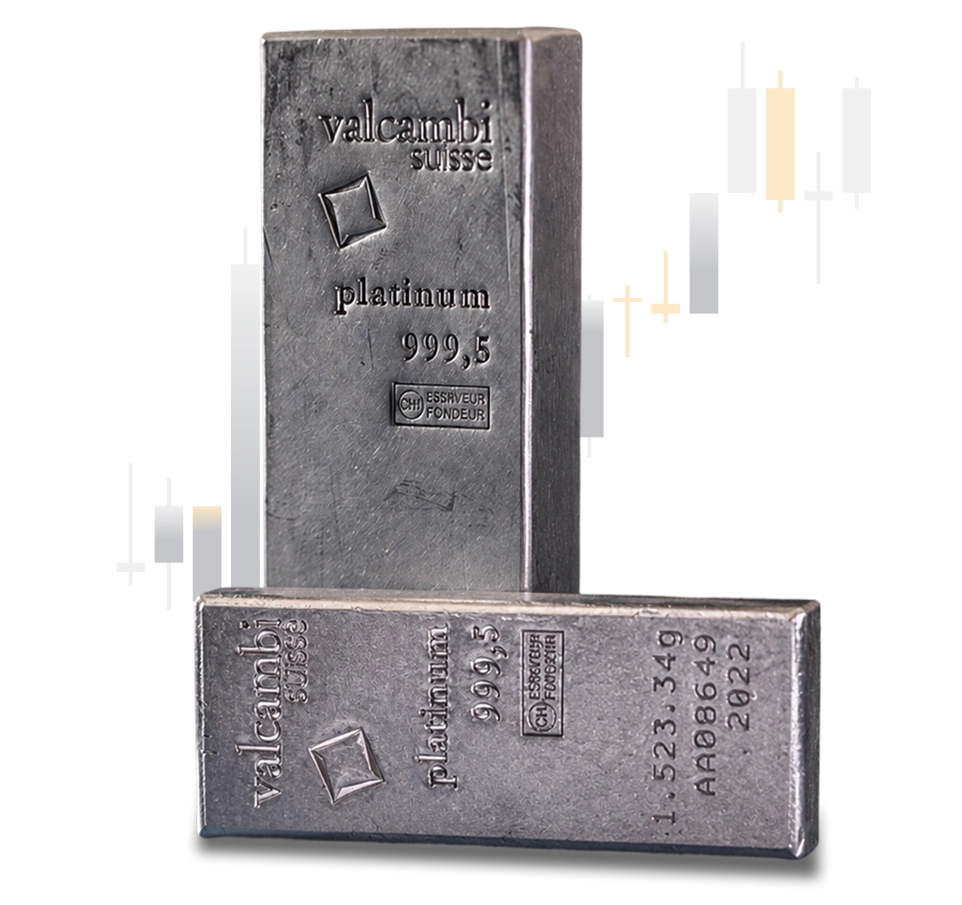
Platinum is one of the rarest precious metals in the world. In 2024, the first signals of a major price surge emerged. Production at mines in South Africa, which account for over 70 percent of global platinum supply, suffered significant delays due to problems with the electricity grid. At the same time, demand from the automotive industry and the emerging hydrogen sector increased strongly.
Throughout 2025, the platinum price broke through one barrier after another. Having hovered around $1,200 per troy ounce for many years, the $1,500 level was breached for the first time in the summer of 2025. In sterling terms, this represented a move through £1,180 per troy ounce.
The platinum price ultimately rose by 101 percent over the course of 2025, an unprecedented annual gain.
The ultimate record was set, as with the silver price record and the gold price record, in the first quarter of 2026. The platinum price reached a historic level of $2,923 per troy ounce in January, equivalent to approximately £68,747 per kilogram for UK investors. This definitively broke the previous record set in 2008.
.jpg)
In the past year alone, more than ten new records were set, with the most recent quarters standing out as particular high points.
The driving forces behind the platinum price records are varied, but share a common thread: scarcity and uncertainty.
Over the past several years, the following factors have accumulated:
Extreme scarcity and production disruptions
Platinum mining is dependent on just a handful of locations worldwide, making the market exceptionally vulnerable to disruptions. Political instability and energy shortages in South Africa, responsible for the vast majority of global production, meant that mines produced significantly less than planned.
Energy transition
The global acceleration of the energy transition led to a sharp increase in demand for available platinum stocks.
The shift from palladium to platinum
Due to the extremely high prices of sister metal palladium, many manufacturers switched to the cheaper platinum for their catalytic converters, pushing the price up further.
To properly interpret the record platinum prices, we also need to look at inflation. In 2008, platinum reached a peak of approximately $2,270 per troy ounce, or around £1,550 at the time, just before the global financial crisis broke out.
Although the price in 2026 was higher in dollar and sterling terms ($2,923 and approximately £2,143 respectively), the purchasing power of that money was far greater in 2008. If we adjust the 2008 price for the inflation of the past eighteen years, the price today would need to exceed $3,200 (or around £2,520) to be truly more expensive in real terms.
This shows that platinum, despite the recent records, remains relatively fairly priced compared to its historical levels.
The outlook for platinum remains very positive. There is a structural deficit in the market that cannot easily be resolved, as opening new mines takes years.
As long as demand from the green energy sector continues to grow and supply from Africa remains constrained, there is a strong likelihood that the platinum price will continue to rise in the coming years and potentially reach new record highs.

The all-time record was set on 26 January 2026, at USD/troy oz: 2,922.76. This is equivalent to approximately GBP/kg: 68,747.
Platinum is far rarer than gold and has many more industrial applications. During periods of economic growth and technological innovation, demand for platinum often rises faster than demand for gold, which can drive its price higher.
Platinum is an essential raw material for technologies that convert hydrogen into clean energy. Global investment in hydrogen projects has caused industrial demand to increase rapidly in a relatively short period, directly influencing the price.
In nominal terms, yes, but not in terms of purchasing power. Due to inflation over the past years, the real value of platinum at its 2008 peak was still higher than during the 2026 record.
No one can predict future price movements with certainty. However, some market analysts point to factors that may support platinum prices, including limited physical supply and growing industrial demand from sectors such as technology and clean energy. At the same time, economic conditions, interest rates, geopolitical events, and shifts in demand can influence prices in either direction. Disclaimer: This information is provided for general informational purposes only and does not constitute investment advice. Past performance is not indicative of future results.


Socials


