
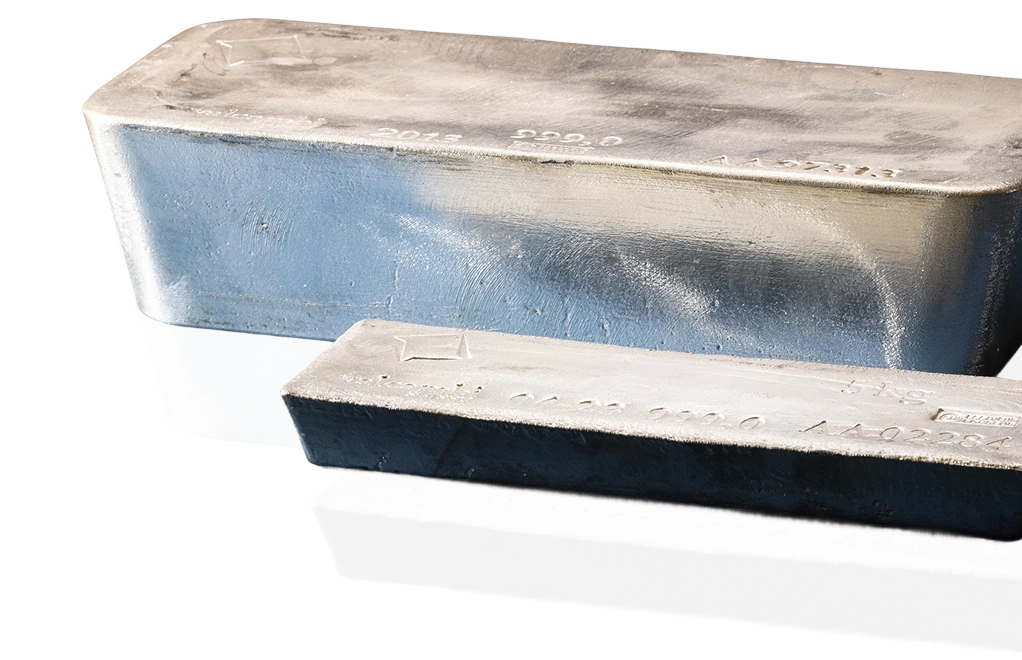
For the silver price, we base our expectations on analyses from various reputable financial institutions and historical returns.

These expectations are not a guarantee or financial advice, but an estimate based on historical data and current market developments.
The silver price is expected to be driven in 2026 by rising industrial demand, particularly from applications in electronics, batteries and solar energy.
J.P. Morgan lowered its silver price forecast again in August. Having previously expected a silver price of $81, J.P. Morgan now expects an average silver price of $70 in 2026, with an expected price of $63 in the fourth quarter of 2026.
Goldman Sachs expects the silver price to trade in a range of $85 to $100 per troy ounce on average in 2026.
According to the LBMA precious metals forecast survey of 31 analysts, the median silver price forecast for 2026 is around $80.

Forecast 2026
Last updated: 24 September 2026, 11:25
per troy ounce
For 2027, the market expects the silver price to bottom out and recover. The use of substitutes and recycling will prevent the silver price from rising excessively, but overall demand will continue to grow in the long term. The silver price is expected to fluctuate between $60 and $90 in 2027.
If the US central bank cuts interest rates, the price could even rise above $100.
J.P. Morgan expects a lower average silver price in 2027 than in 2026. The financial institution assumes an average silver price of $63 per ounce in 2027.
Forecast 2027
Last updated: 24 September 2026, 11:25
per troy ounce
.jpg)
By 2030, many experts expect above-ground silver stocks to be largely depleted by industrial use, which could logically lead to a sharp rise in the silver price.
If we take J.P. Morgan's forecast for 2027 ($63 per troy ounce) and the average long-term return of 8% per year, the silver price could reach around $80 per troy ounce in 2030.

Forecast 2030
24 September 2026, 11:25
per troy ounce
No concrete forecasts for 2040 have yet been published by the parties mentioned above. However, by taking an average price of around $80 per ounce in 2030 and the average long-term return on silver (around 8% per year), we can estimate price developments up to 2040.
This means that in 2040 the silver price could reach around $175 per troy ounce.
Forecast 2040
Last updated: 24 September 2026, 11:25
per troy ounce
.jpg)

Industrial demand:
Silver is essential in technology, solar energy and electric cars, which increases demand.

Supply and mining:
New discoveries, investment in mining and recycling affect the available supply.

Economic situation:
Inflation, interest rate policy and exchange rate developments, particularly of the dollar, are crucial.

Geopolitical tensions:
Uncertainty and global crises often lead to higher demand for silver as a safe haven.
At GoldRepublic, you can buy silver bullion of high quality, sourced from LBMA-certified refineries and stored in vaults managed by independent third parties.
You can start with a small deposit and also save in silver bullion on a regular basis, automatically buying silver at the current market price. Any silver you buy or save through GoldRepublic can also always be sold back to us.
Thanks to our years of experience and transparent storage methods, you can be assured of a safe and reliable investment.
The content of this article is for informational purposes and is based on facts and analysis. It does not constitute investment advice or a guarantee of returns. Investing always involves risk.

Many major financial institutions expect silver prices to rise in 2026. This outlook is driven by increasing industrial demand (particularly from the energy transition and electrification), continued investor interest, and potential interest rate cuts by central banks. The actual outcome will depend on economic growth, inflation, and industrial demand trends.
The exact peak is difficult to predict, but analysts regularly cite target prices between $30 and $50 per troy ounce for the coming years. Whether these levels are reached depends heavily on industrial demand, the value of the dollar, interest rate policy and investor sentiment. Historically, silver is more volatile than gold and can rise more sharply (but also fall more sharply).
Key factors include industrial demand (such as solar energy and electronics), central bank policies, the US dollar, and investor sentiment. Inflation, economic growth, and supply-demand dynamics also play an important role. Silver tends to respond more strongly to economic cycles than gold.
Most analysts are moderately to strongly positive on silver for the coming years. The outlook is supported by rising demand from the energy transition and technological applications. However, a strong dollar or economic slowdown could put pressure on prices.
Long-term forecasts for silver towards 2030 are positive, largely due to structural industrial demand. The energy transition, including solar panels and electric vehicles, is expected to significantly increase demand. Combined with relatively limited supply, this supports a bullish long-term outlook.
Whether now is a good time to invest depends on your investment horizon and risk profile. Silver can be attractive as an inflation hedge and growth-oriented commodity but comes with higher volatility. A phased investment approach can help reduce timing risk.
Interest rate cuts generally have a positive effect on silver prices. Lower rates make precious metals more attractive compared to interest-bearing assets like bonds. Additionally, a weaker dollar can increase demand for silver. As an industrial metal, silver also benefits from economic growth.
Forecasts for 2040 are inherently uncertain, but long-term trends point to growing demand driven by technological innovation and the energy transition. Limited mining supply, increasing industrial use, and silver’s role as an investment asset support a positive long-term outlook.


Socials


