

Silver halves in value: should we be worried?
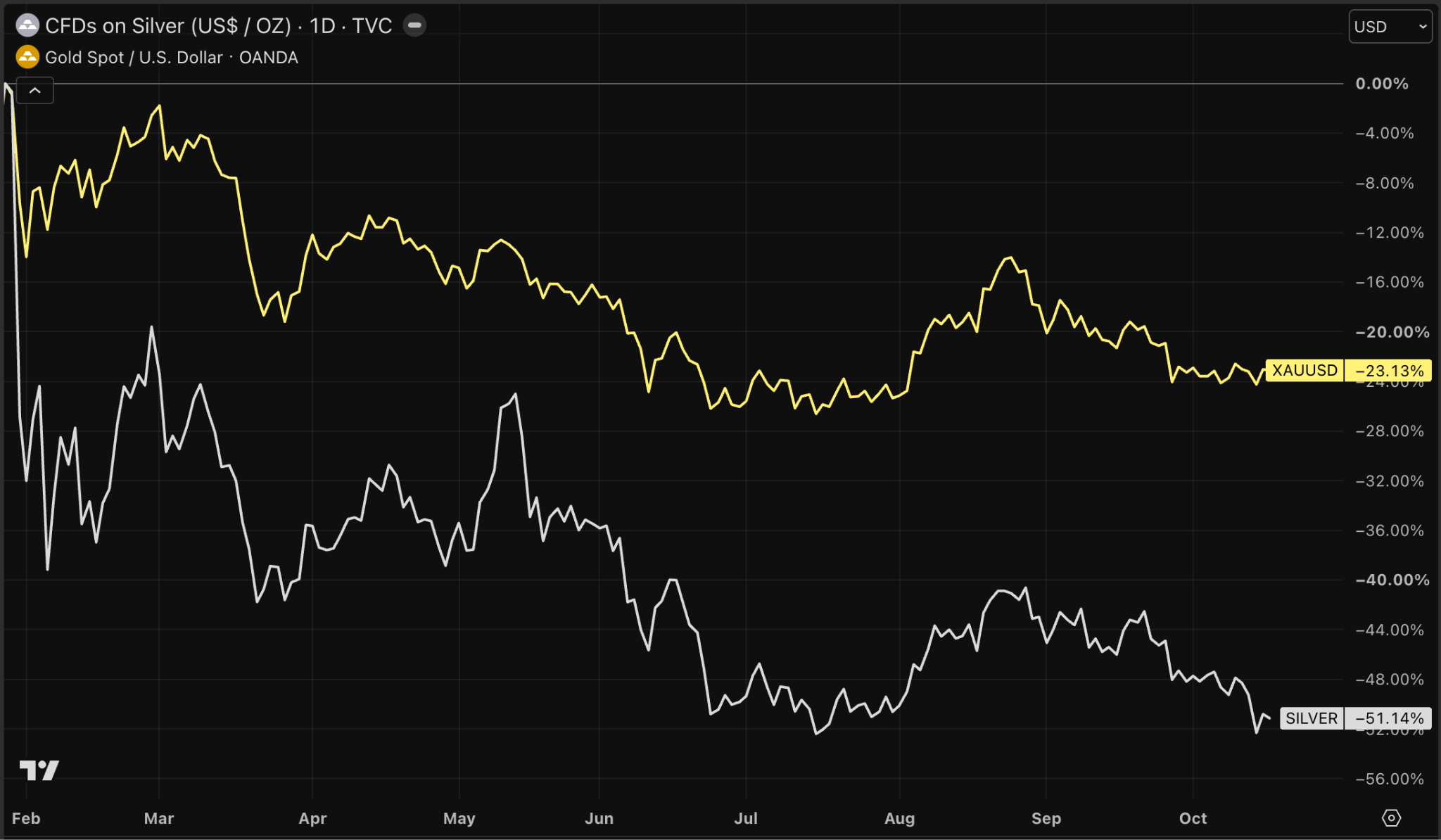
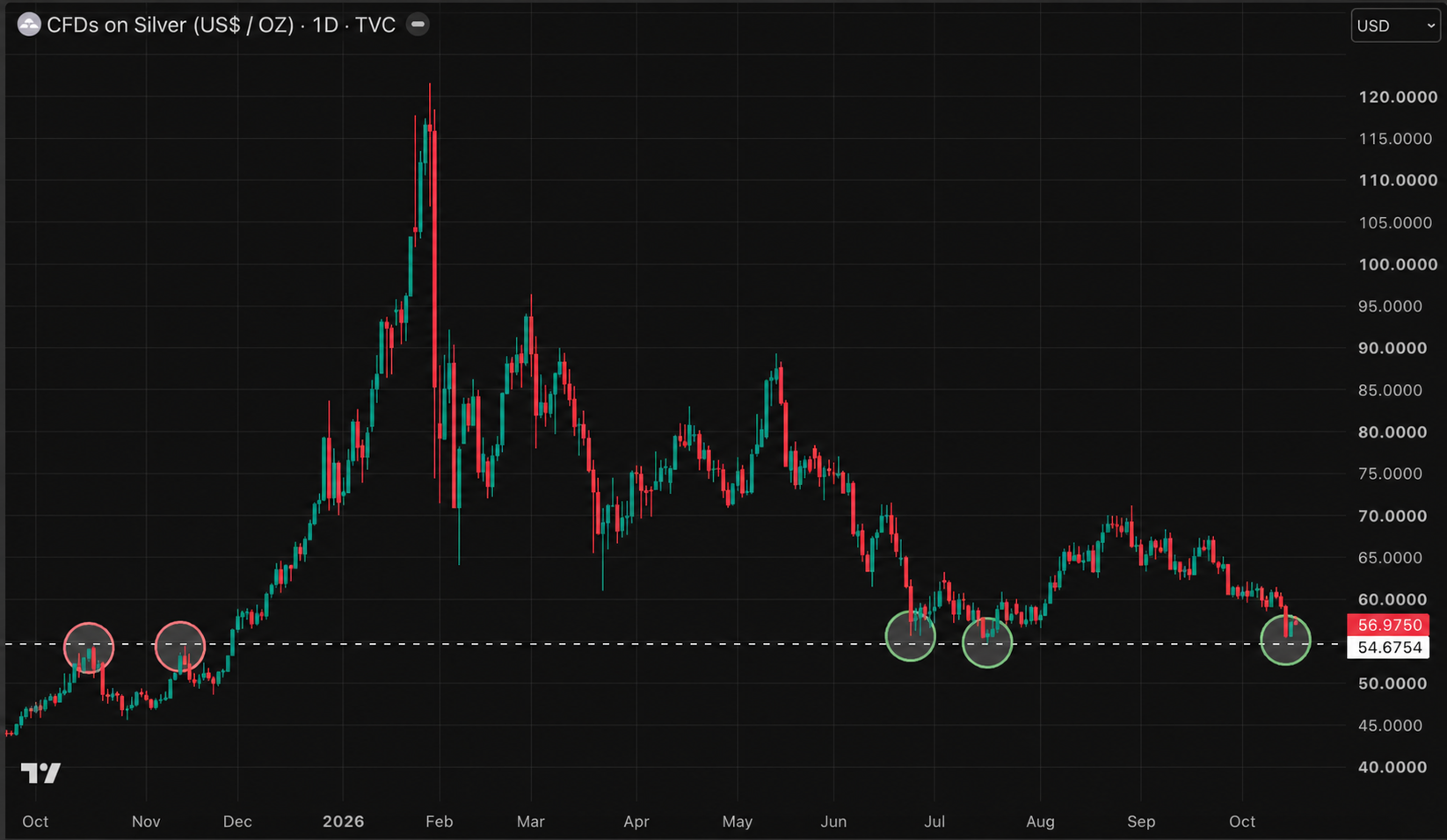
The silver price has fallen by more than 50 percent since its record of almost 122 dollars per ounce in January. Gold lost around 25 percent of its market value over the same period. Why is silver being hit so much harder? And does the correction tell us anything about the health of the global economy?
Why silver falls harder than gold
The main difference between gold and silver lies in the economic function of the two precious metals. Gold is mainly bought as an investment, a store of value, a reserve and protection against financial uncertainty.
Silver has two faces. It is a precious metal with a monetary function, but at the same time an important industrial commodity. More than half of annual demand comes from industry.
This makes silver more sensitive to economic headwinds. When investors expect the global economy to slow, fears of weakening industrial demand for silver grow as well.
That may have played a role in the recent price drop. Even so, speculation seems to be a more important explanation for the size of the correction.
The spectacular silver rally of early 2026 attracted a lot of speculative capital. According to research by the Bank for International Settlements (BIS), leveraged positions and forced selling amplified the subsequent decline. This makes speculation an important explanation for the initial price drop. The persistent weakness in the months that followed, however, is harder to explain by these factors alone.
On top of that, the silver market is considerably smaller and less liquid than the gold market. As a result, large capital flows can cause relatively sharp price movements. The price drop is therefore not automatically a warning sign of economic trouble.
Rising interest rates complicate the picture
The US 10-year yield recently climbed to its highest level in more than twenty years. This was not only due to inflation concerns and the rising US national debt. The enormous demand for capital from the AI investment wave also plays a role.
That last development actually points to economic strength. Technology companies are investing hundreds of billions of dollars in chips, data centers and energy infrastructure. These investments support growth, but at the same time increase the demand for capital.
Rising bond yields are therefore not necessarily a negative signal. They can also be the result of an economy in which certain sectors are thriving.
For silver, that is interesting. The huge investments in computer chips and electrical infrastructure could support industrial demand for the precious metal.
Even so, we recently saw the US 10-year yield fall from just over 5.30 to around 5.10 percent. And that despite higher-than-expected inflation figures.
That move suggests that, alongside inflation, concerns about the economic outlook are starting to play a bigger role.
The AI investment wave in particular is under the microscope. Investors are increasingly asking whether the hundreds of billions of dollars invested will generate sufficient returns.
If those doubts lead to lower growth expectations and a flight to government bonds, bond yields could fall, even if inflation remains stubborn.
For silver, this creates a double risk. High real interest rates make holding precious metals less attractive, while an economic slowdown could weaken industrial demand.
Even so, the correction in silver since the January 2026 peak seems to be explained mainly by speculation and the smaller size of the market.
Why an AI crisis could ultimately work out well for silver
In the short term, a possible crisis around AI investment actually poses a risk to silver. If technology companies scale back their investments and the economy slows, industrial demand could come under pressure.
Moreover, the 2008 financial crisis showed that silver is particularly vulnerable during financial panic. At the time, the precious metal lost more than half of its value.
Yet a remarkable turnaround followed. Central banks cut interest rates and introduced large-scale stimulus measures. In the years that followed, silver embarked on a spectacular rally.
A similar scenario is conceivable if problems around AI investment spill over into the wider economy and financial markets. The initial reaction may be negative, but any rate cuts and monetary easing could create favorable conditions in the longer term.
So it is not so much an AI crisis that is positive for silver, but rather the possible policy response to such a crisis.
The chip revolution still needs silver
In addition, it is hard to imagine a future in which the world needs less computing power, fewer chips and less electrical infrastructure.
Silver is the best conductor of electricity and heat of all metals. As a result, it plays an important role in high-end electronics, electrical connections and the infrastructure around data centers.
Research by Oxford Economics also points to growing silver demand from AI, data centers and electrification. This keeps the outlook for silver's economic function favorable.
In the short term, however, that growth does not yet offset the weakness in other sectors. Solar panel manufacturers, for example, are using less and less silver per solar cell. As a result, the Silver Institute expects industrial silver demand to fall by around 3 percent in 2026.
At the same time, the physical market remains tight. The Silver Institute forecasts a deficit of around 46 million ounces for 2026, which is being covered from existing inventories for now.
This means the silver market will remain dependent on existing inventories to meet demand for the time being. However, such a deficit is no guarantee of higher prices. In the short term, investor flows and macroeconomic developments can carry more weight than physical demand.
Historic buying opportunity or warning?
Silver's sharp correction deserves to be taken seriously. Ultimately, no one can rule out a further fall in price in the short term. Even so, there appears to be strong market support around this level.
In 2025, the current price level was still a resistance level for silver. In 2026, by contrast, it appears to be acting as support.
In addition, the arguments for buying silver for the long term still stand. Silver will benefit from the chip revolution, while the growing debt problem increases the likelihood of future monetary stimulus.
Therein lies the paradox. The conditions putting pressure on silver today could ultimately lay the foundation for a new rally, driven by both monetary and industrial demand.
The silver price has fallen more than 50% since January. Find out why silver is falling harder than gold and what this means for the outlook.

Thom Derks writes for GoldRepublic on gold, macro-economics and geopolitics. He studied Law in Leiden and Economics in Amsterdam. His personal fascination with scarcity and store of value through both bitcoin and gold brought him into the world of financial journalism. Through his own newsletter De Geldpers on Substack, he reaches over 5,800 subscribers with analyses on markets, geopolitics and the monetary system.